
Cisco Cyber Ops
Thus this S3 can upgrade his profile to reflect his latest achievement; the Cyber OPS BADGE from CISCO. To qualify for this Dhruv had to successfully pass and score well in the CYBER OPS Exams meant for CISCO vendors. His achievements in this regard include:
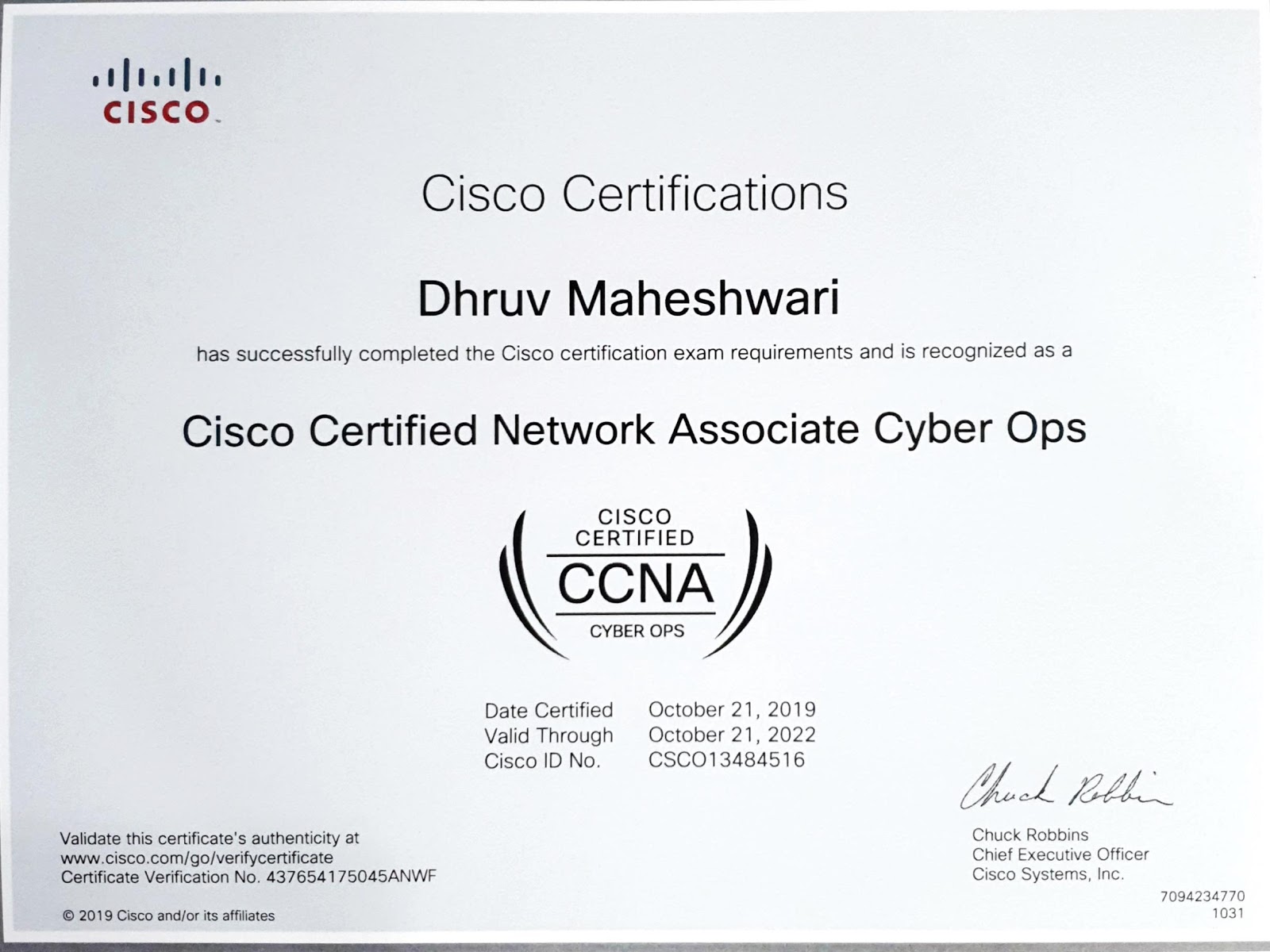
Going through the entire process of preparing and sitting for a corporate level exam was not easy for a student of S3. Yet he makes this journey seem so pleasant. His interest in helping the nation combat the menace of cyber theft made him overcome all the difficulties successfully. He aims to rid his country of all cybersecurity issues in the future.
Dhruv has put in a lot of effort to obtain this certification.
- First he had to go to the University of the West of Scotland to attend the University’s summer school and complete his University level Cisco academy exams.
- Then he had to specialize in CYBER SECURITY to obtain the CISCO vendor’s certificates.
His exams were held at the Pearson Vue Centre situated on Cardonald campus of Clyde College.
Above is given the Cyber Ops Certificate presented to him by David Paterson. Dhruv’s learning from the above course includes an understanding of the:
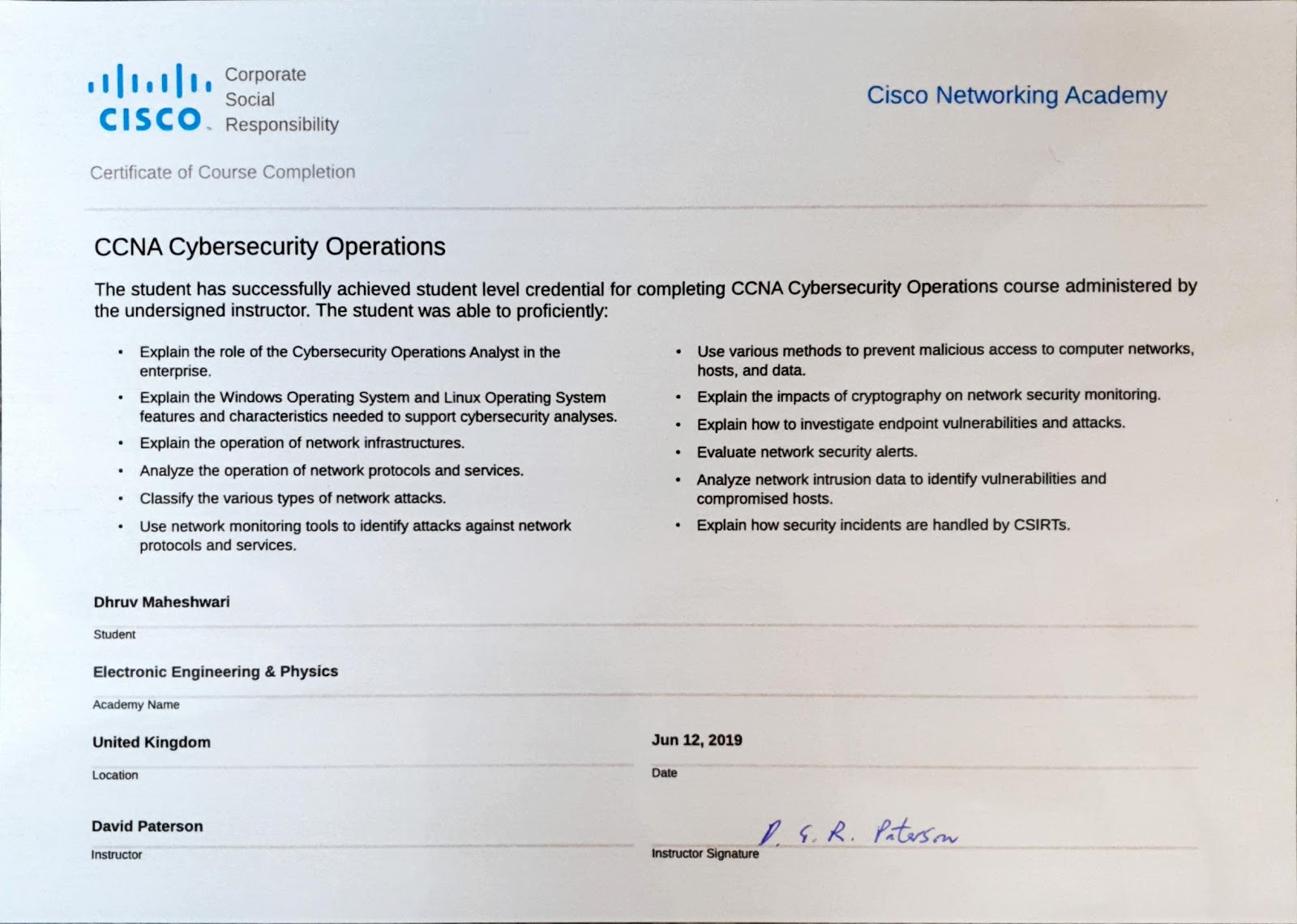
- Role played by a Cyber security Operations Analyst in an enterprise.
- Features and characteristics of Windows and Linux Operating Systems that help support cyber security analytics.
- Network infrastructure operations.
- Analysis of network protocols and services.
- Classification of the myriad network attacks that take place.
- Network monitoring tools that are used to identify attacks made against network protocols and services.
- Various methods used to prevent attempts of malicious access to computer networks, hosts and data.
- Impacts of cryptography on network security monitoring.
- Process of investigating endpoint vulnerabilities and attacks.
- Network security alerts.
- Network intrusion data and its analysis it to identify vulnerabilities and compromised hosts.
- Ways in which CSIRTs handle security incidents.